Mao Set Kill Quotas by City: 700,000 Executed in 1951
In 1951, gunshots rang through the lives of countless ordinary people across China. Men who had switched sides, surrendered to the winning faction, or actively assisted the new Communist regime in its rise to power found themselves denied the “new life” they had been promised. Instead, they were swiftly sorted, tried, and shot in a nationwide killing campaign the Party called the “suppression of counterrevolutionaries.” Personal histories were flattened. Life and death were reduced to quota figures.
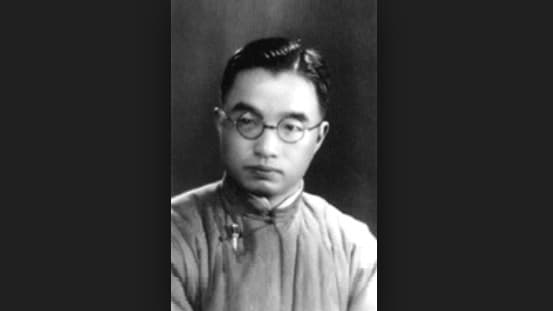
Zhu Maixi, eldest son of Zhu Ziqing, one of modern China’s most celebrated prose writers, had walked out of a literary household and into the current of his times. He believed he had chosen the right side. He was 33 years old when a county court in Hunan Province sentenced him to death. He left behind three young children.
The famous essayist’s son, executed as a ‘counterrevolutionary’
Many Chinese readers encounter Zhu Ziqing first through his essay “Back View,” a spare, moving account of watching his father walk away at a railway station. “I have not seen my father for more than two years,” the essay begins. “What I cannot forget most is his back view.” Zhu’s prose, deliberately plain and emotionally precise, made him one of the defining literary voices of twentieth-century China.
That same tenderness for family appears in his essay “To My Dead Wife,” where he described his eldest son with brief, affectionate pride: the boy had grown tall and strong, already a full head taller than his father. The child who inspired those words died by firing squad.
Zhu Maixi had absorbed his father’s love of literature but did not follow him into writing. Drawn instead into Communist ideology, he joined the Party and became an operative. During the war against Japan, the Party assigned him to infiltrate the Nationalist army; he fought in the anti-Japanese military campaigns in Guangxi in 1939 and 1940. During the civil war that followed, he successfully organized the defection of Nationalist military and government personnel in northern Guangxi, and afterward settled into a teaching post at a middle school.
SIGN UP FOR OUR FREE NEWSLETTER
You are now signed up for our newsletter
Check your email to complete sign up
He had served the Party faithfully. None of it protected him. In November 1951, a court in Xinning County, Hunan Province, convicted him of being a “bandit spy,” a catch-all counterrevolutionary label the Party applied at will, and executed him the same day. The 1984 verdict acknowledging the judgment had been wrong came three decades too late to help him or his children.
Loyal Party operatives and surrendered soldiers killed by the thousands
The campaign swept up two overlapping groups in particular: Nationalist military and government personnel who had surrendered or defected to the Communists, and Chinese Communist Party-affiliated underground fighters who had operated under civilian cover and were therefore now treated as inherently suspicious.
In Hengyang, Hunan Province, a CCP underground cell led by a local organizer named Liu Bolü became a target. Most of its members came from landlord families, a class background the Party treated as politically toxic. Work teams sent down from above used forced confessions to “establish” that the local network was in fact a front for an anti-Communist resistance organization. Liu was designated a “bandit-spy ringleader” and a “landlord bully.” More than 200 people were caught in the dragnet. Many were tortured. Eight were shot. Five received prison sentences. Four were dismissed from their posts. One disappeared entirely.
Among those who had crossed over to join the Communist military through political defection or negotiated surrender, 22,000 were expelled from the ranks or sentenced to prison terms, forced labor, or supervised control. The vast majority were former soldiers of Nationalist general Fu Zuoyi, who had famously surrendered Beijing to the Communists in January 1949. Many of them had fought against Japan.
Mao personally set kill quotas for individual cities
In a January 1954 internal report, then-deputy public security minister Xu Zirong disclosed that the campaign had resulted in the arrest of 2.62 million people, of whom 712,000 were executed. That figure represented 1.31 people out of every thousand in China’s population. An additional 1.29 million were sentenced to prison or forced labor. Another 1.2 million were placed under supervised control. Around 380,000 were subjected to political re-education and then released.
In April 1954, Mao Zedong, the Party’s founder and unchallenged ruler, told a closed-door session of senior Party leaders that two to three million counterrevolutionaries had been executed, imprisoned, or placed under control. By February 1957, he had revised his public account of the executions, acknowledging at a high-level forum he used to address senior officials outside normal Party channels that 700,000 had been killed between 1950 and 1952, and a further 70,000 to 80,000 between 1953 and 1956.
The official figures, bad as they are, almost certainly undercount the dead. Yang Kuisong, a historian specializing in CCP history, has written that in late April 1951, Mao intervened to slow the pace of killing in certain areas where he felt the numbers were becoming excessive, and that some localities responded by concealing their actual totals. The real national execution count, Yang concludes, very likely exceeded the official figure of 712,000 by a significant margin. Independent estimates place the true number of executions at somewhere between one million and two million, possibly higher.
On Jan. 21, 1951, Mao cabled the Shanghai municipal Party committee: “In a big city like Shanghai, probably it will take one to two thousand executions during this year to solve the problem. In the spring, three to five hundred executions will be needed to suppress the enemy’s arrogance and enhance the people’s morale. In Nanjing, the East China Bureau should direct the party’s municipality committee … and strive to execute one to two hundred of the most important reactionaries in the spring.”
The following day, Mao wrote to the Party leadership in Guangdong Province: “It is very good that you have already killed more than 3,700. Another three to four thousand should be killed … the target for this year’s executions may be eight or nine thousand.”
In February 1951, the CCP Central Committee convened to set the national proportional kill rate. The decision: execute half of one-thousandth of the total population first, then assess the situation. With China’s population then at 550 million, half of one-thousandth came to 275,000 people.
Party decrees made ‘spreading rumors’ a capital offense
On Feb. 21, 1951, the Party issued the “Regulations of the People’s Republic of China for the Punishment of Counterrevolutionaries,” a decree that applied the death penalty across more than a dozen categories of offense. The standards for sentencing were deliberately elastic. Under the regulations, “spreading rumors” was punishable by immediate execution.
By March 30, Mao was pushing local Party committees to move faster, criticizing those he saw as insufficiently aggressive in carrying out the killings and demanding they act more boldly.
The campaign then accelerated into a frenzy of summary proceedings. Men and women who had already served prison or labor terms under earlier judgments were dragged back before tribunals, told nothing new had been found against them, retried anyway, and shot. Earlier Central Committee directives had signaled that while provinces with especially high arrest and kill rates should pause to “summarize experience,” all others, “especially large and medium-sized cities,” should press ahead with mass arrests and executions and not halt prematurely.
Party directives authorized the confiscation of “counterrevolutionaries'” property, and the regime plundered accordingly.
Senior Nationalist officials survived; local operatives and civil servants were shot
The primary targets were low-level Nationalist government employees: county magistrates, township heads, village chiefs, teachers, civil servants. These were people with local roots, local knowledge, and local relationships, exactly the kind of network the Party wanted destroyed. High-ranking Nationalist officials were an entirely different matter. Provincial governors, bureau chiefs, and senior commanders captured by the Communists were generally kept alive and given seats on the Party’s political consultative body, a decorative advisory forum with no actual power. The calculation was transparent: prominent figures still in Taiwan or abroad might be tempted to return if they saw their former colleagues well treated. Small men with no propaganda value had no such protection.
Chinese-American historian Xin Haonian, a scholar of the Republican era, has argued that the campaign’s underlying drivers included the Party’s instinctive appetite for violence and a calculated effort to redirect public attention away from the economic hardship of the early 1950s. Simultaneously, in October 1950, Chinese Communist forces entered Korea to fight alongside North Korean troops against United Nations forces led by the United States, and Mao seized on the atmosphere of wartime mobilization to intensify the killings at home.
In 1953, Luo Ruiqing, the public security minister who had overseen the campaign, acknowledged publicly that the most serious problems had included arbitrary arrests and suppression, torture used to extract confessions, and the fabrication and exaggeration of cases. Mao consistently maintained afterward that the campaign had been, at its core, “correct,” and he refused to authorize any systematic review or rehabilitation of wrongful convictions.
Decades later, the Party acknowledged its errors, but only in part
Only in the 1980s did the CCP formally acknowledge, in carefully hedged language, that some of those killed during the campaign had in fact been “personnel who had risen up or surrendered.” Zhu Maixi’s conviction was among the cases overturned in 1984, more than three decades after his execution. The rehabilitation restored his name to an official record. It did nothing for his three children, who had grown up without a father, or for the tens of thousands of other families whose losses the Party has never fully accounted for.
The Party has never ordered a general review of those it wrongly executed, and 712,000 remains the only official death toll it has ever acknowledged.
By He Zi, Vision Times