Iran War Drains US Military Stockpiles as Think Tank Warns Replenishment Will Take Time
Although the conflict between the United States and Iran has temporarily subsided, concerns within Washington over weapons stockpiles are rapidly intensifying.
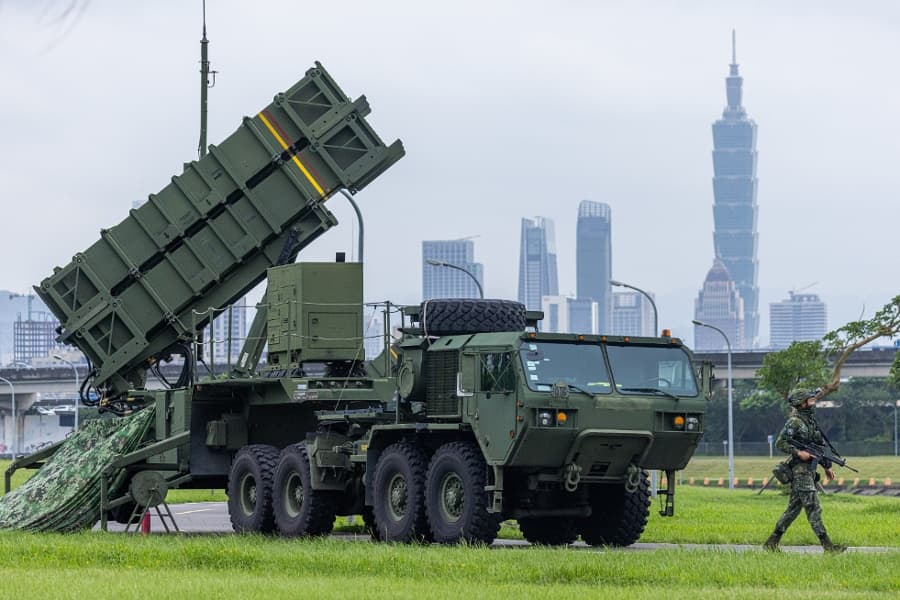
A newly released study by the Center for Strategic and International Studies (CSIS) on May 27 found that after the U.S. military heavily used Tomahawk cruise missiles, Patriot air defense interceptors, and THAAD (Terminal High Altitude Area Defense) missile defense systems during the Iran war, it could take at least three years to replenish related stockpiles.
The report argued that such consumption is exposing a “window of vulnerability” for the United States in the event of a future potential conflict in the western Pacific.
Analysts said the United States still currently possesses enough ammunition to meet operational requirements related to Iran. However, the concern is that after such high-intensity consumption, U.S. firepower reserves could face significant constraints if Washington were simultaneously confronted with military pressure from China in the future.
The Trump administration has dramatically increased military spending, but restoring production capacity will still require time.
SIGN UP FOR OUR FREE NEWSLETTER
You are now signed up for our newsletter
Check your email to complete sign up
The report incorporates the Trump administration’s proposed $1.5 trillion defense budget for fiscal year 2027 into its assessment. According to the report, although both Republicans and Democrats currently support increasing stockpiles of advanced munitions, the real issue is no longer whether there is enough money, but whether there is enough time.
CSIS stated in the report that expanding missile production capacity, building complex supply chains, and increasing factory output all require years to accomplish, while the United States is currently in a dangerous transitional period.
U.S. Defense Secretary Pete Hegseth recently emphasized during congressional testimony that the Trump administration’s defense spending plan would help defense contractors increase production capacity by two to three times. At a Cabinet meeting this week, he again praised the expansion speed of the U.S. defense industrial system as “unprecedented.”
Meanwhile, Pentagon chief spokesperson Sean Parnell said in a statement that the U.S. military “has everything it needs to execute any mission at the time and place of the President’s choosing.”
Unconvinced analysts
However, some military analysts are not entirely convinced.
Virginia Burger, senior defense policy analyst at the Project On Government Oversight, told the Associated Press the Pentagon is well aware of the pressure on military stockpiles. Pentagon officials “knew the reality of our military stockpiles and hopefully told someone, ‘Hey, if we go to this fight, even in the most conservative estimates, we are drawing down our stockpiles to a critical level,’” she said.
The “low-stockpile logic” adopted after the end of the Cold War is now beginning to backfire on the United States.
According to the Associated Press, Mark Cancian, senior adviser at CSIS and a retired Marine Corps colonel, believes that the roots of the difficulties the United States faces today can actually be traced back to the post–Cold War era.
After the collapse of the Soviet Union, the United States long believed that future wars would mainly be short-term, regional conflicts, making it unnecessary to maintain massive stockpiles of advanced missiles. At the time, the Pentagon reduced procurement levels, and defense contractors correspondingly scaled back production lines.
However, the Russia-Ukraine war changed that perception.
Cancian pointed out that the war in Ukraine demonstrated that modern warfare can not only become prolonged, but can also consume advanced weapon stockpiles at an extraordinary rate. At the same time, the U.S. military has been continuously simulating potential conflict scenarios in the western Pacific, rapidly increasing demand for missile reserves.
He noted that the U.S. government had actually begun coordinating production expansion with defense companies and investing in the industrial base as early as the Biden administration. “A lot of people in the Trump administration are inclined to say that everything was terrible until they arrived, and that’s not true,” he told the Associated Press.
Nevertheless, he acknowledged that the Trump administration has indeed further increased defense spending efforts.
Timelines revealed for replenishing Tomahawk, THAAD, and Patriot stockpiles
According to CSIS estimates, the United States launched more than 1,000 Tomahawk cruise missiles during the Iran war, and restoring inventories to prewar levels may not be possible until after 2030.
The report stated that because past order volumes were relatively small, annual production of Tomahawk missiles had previously been under 200 units. Manufacturer Raytheon is now attempting to raise production capacity to more than 1,000 missiles per year.
RTX, Raytheon’s parent company, did not directly respond to the CSIS findings, but said it has invested billions of dollars to expand factories in Arizona and Alabama in order to increase missile production capacity.
In terms of air defense systems, the U.S. military consumed large numbers of THAAD and Patriot interceptors while countering Iranian missiles and drones.
CSIS estimates that replenishing as many as 290 THAAD interceptors may take until the end of 2029, while restoring more than 1,000 Patriot missiles may not be completed until around mid-2029.
Supply to other allies
The Wall Street Journal previously pointed out that the United States currently not only needs to rebuild its own stockpiles, but must also continue supplying air defense systems to Ukraine while meeting the needs of 17 countries worldwide that use the Patriot missile system. This has placed growing strain on the Pentagon’s allocation and deployment capabilities.
Lockheed Martin stated that the company plans to invest $9 billion by 2030 to expand munitions production and has already added more than 20 related facilities across the United States.
Although the report warned about stockpile pressures, CSIS also argued that a certain degree of “deterrence balance” still exists between the United States and China.
The report noted that the U.S. military’s recent demonstrations of long-range strike and joint operational capabilities in operations involving Iran, Venezuela, and Yemen’s Houthi forces continue to reflect significant military advantages.
At the same time, the report emphasized that the Chinese military lacks modern combat experience, and that its performance during the 1979 Sino-Vietnamese War was not considered impressive.
“That difference in experience may preserve deterrence until munitions inventories are restored,” the report stated.