China Enters the Reusable Rocket Race, but SpaceX Still Holds a Significant Lead
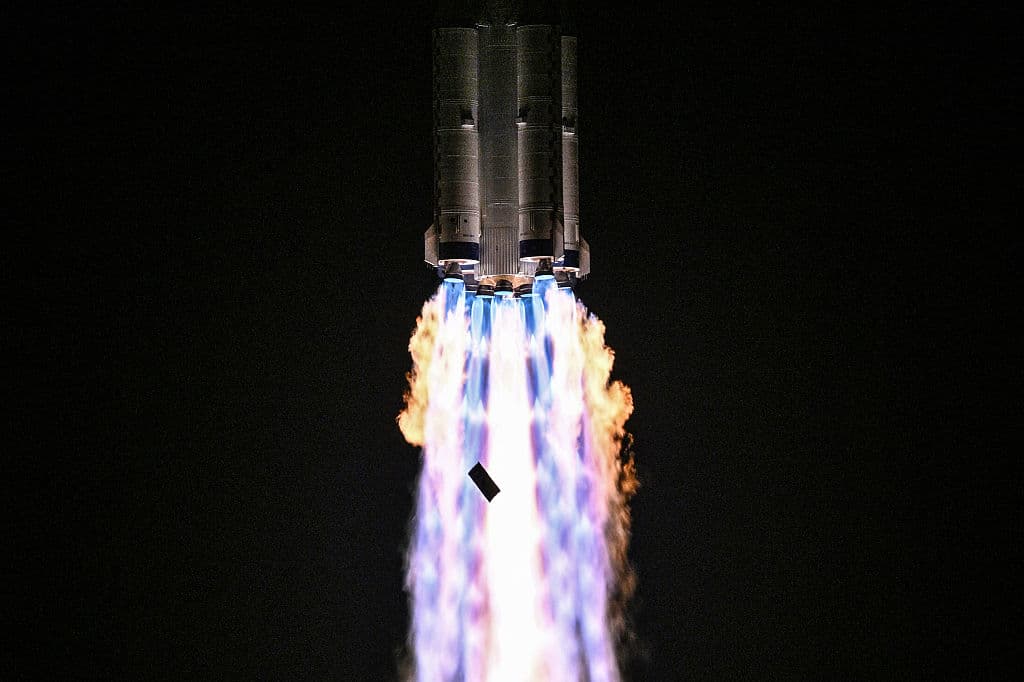
According to Reuters, China has achieved a major milestone in reusable rocket technology after successfully recovering the first stage of its Long March 10B rocket, marking the country’s first controlled recovery of an orbital-class booster.
The achievement places China among a small group of nations and companies pursuing reusable launch systems, a technology pioneered commercially by SpaceX.
However, while the landing represents a major advance for China’s space program, it also highlights the significant gap that remains between Beijing’s ambitions and SpaceX’s operational reality.
🚀🇨🇳 China has successfully landed the reusable first stage of its new Long March 10B rocket on a floating platform in the ocean for the first time. This breakthrough marks a major step toward fully reusable launch systems, promising to dramatically reduce launch costs and… pic.twitter.com/BikL1x911d— Science Latte (@sciencelatte) July 13, 2026
🚀🇨🇳 China has successfully landed the reusable first stage of its new Long March 10B rocket on a floating platform in the ocean for the first time. This breakthrough marks a major step toward fully reusable launch systems, promising to dramatically reduce launch costs and… pic.twitter.com/BikL1x911d
China’s breakthrough: The Long March 10B recovery
According to Ars Tenchnica, China’s Long March 10B successfully launched from the Wenchang Commercial Space Launch Site before recovering its booster using a new sea-based “net capture” system. Unlike SpaceX’s Falcon 9, which lands vertically using deployable legs, the Chinese booster descended toward an offshore platform and was captured by a large recovery structure.
The rocket is designed to carry approximately 16 metric tons to low Earth orbit, placing it in a similar payload category as SpaceX’s Falcon 9.
SIGN UP FOR OUR FREE NEWSLETTER
You are now signed up for our newsletter
Check your email to complete sign up
For China, the achievement has major strategic significance. Reusable rockets are considered essential for lowering launch costs, deploying large satellite constellations, and supporting future lunar missions, key objectives in Beijing’s long-term space strategy.
SpaceX achieved the first successful landing of an orbital-class Falcon 9 booster in 2015. Since then, the company has developed a mature reuse system that allows individual boosters to fly multiple missions.
The Falcon 9 recovery process uses autonomous navigation, grid fins, engine relights, and precision landings on both ground platforms and autonomous drone ships.
The difference is that SpaceX has moved beyond proving a rocket can land. It has transformed rocket reuse into a routine commercial operation.
Reusability remains unproven
Although China’s Long March 10B recovery is a major technological achievement, it remains unclear whether the system has reached true operational reusability comparable to SpaceX’s Falcon 9.
Landing a rocket is only the first step. A truly reusable launch system requires recovered hardware to undergo inspection, refurbishment, and eventual relaunch with minimal cost and downtime.
China has not yet disclosed whether the recovered booster’s engines, fuel systems, avionics, and structural components survived in a condition suitable for future flights. It is also unclear whether the booster will undergo a full refurbishment process or attempt another launch.
By comparison, SpaceX’s Falcon 9 boosters have demonstrated practical reusability, with some completing more than 20 missions. This repeated use of the same hardware is what has helped dramatically reduce launch costs and reshape the commercial space industry.
China’s achievement marks an important step, but its long-term significance will depend on whether recovered boosters can be reliably restored and flown again.
Starship raises the stakes
The comparison between China and SpaceX is further complicated by SpaceX’s development of Starship.
While Falcon 9 reuses only its first-stage booster, Starship is designed for full-system reusability, including both the spacecraft and the launch vehicle. SpaceX is attempting to create a system capable of launching, landing, and flying again with minimal refurbishment.
China is also developing next-generation reusable rockets, including commercial vehicles such as Zhuque-3, but it remains behind SpaceX in operational experience, launch frequency, and proven reuse capability.
The successful recovery of the Long March 10B represents a turning point in the global space race. China has demonstrated that it can develop advanced reusable rocket technology and is closing a gap that once appeared difficult to overcome.
However, SpaceX remains years ahead in practical experience, launch cadence, and commercial deployment.
The question is no longer whether China can build a reusable rocket it is whether Beijing can turn a successful landing into a fully developed reusable launch ecosystem capable of challenging Elon Musk’s space ambitions.