Pentagon Seeks $1 Billion to Arm Against a CCP Invasion of Taiwan
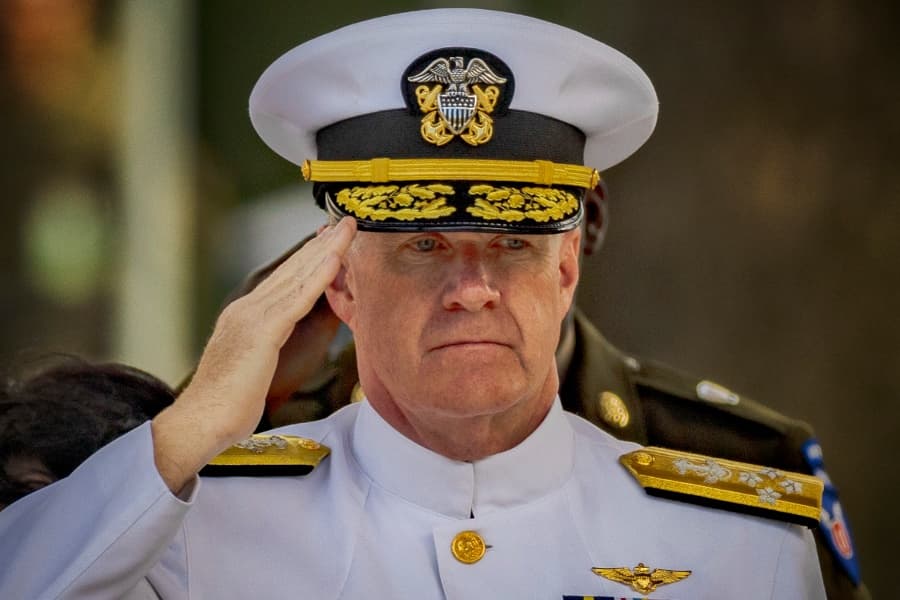
According to Bloomberg, Admiral Samuel Paparo, who commands all U.S. military operations from the Pacific to the Indian Ocean, submitted a 121-page budget request to Congress on May 29 that treats 2027 as a hard deadline: the year Beijing’s forces are projected to be ready to seize Taiwan by force. The $1 billion-plus weapons package he is asking Congress to approve is built around one objective — making the waters between China and Taiwan too lethal for an invasion fleet to cross.
A $1 billion arsenal to sink ships, lay mines, and blind Chinese radar
The centerpiece of Paparo’s request is $592 million for a system called Quicksink, a weapon designed to turn a standard Joint Direct Attack Munition, the satellite-guided bomb already carried by most U.S. combat aircraft, into a low-cost, all-weather anti-ship weapon. Quicksink detonates below the waterline, targeting the keel, the structural spine of a ship. A keel strike causes catastrophic flooding and typically breaks the vessel apart. China’s navy outnumbers the U.S. Pacific fleet in surface vessels, and a conventional engagement would be costly and slow. Quicksink is designed to let aircraft rapidly destroy large numbers of enemy ships at a fraction of the cost of purpose-built anti-ship missiles.
Alongside Quicksink, Paparo requested $531 million for the Quickstrike mine program. Quickstrike mines can be dropped from aircraft into shallow coastal waters or laid covertly by submarines. The budget request includes funding for a next-generation variant called Hammerhead, designed to dramatically expand America’s ability to seal off key maritime chokepoints without exposing surface ships or submarines to Chinese fire. A dense minefield between the Chinese coast and Taiwan’s shores would slow or stop an amphibious landing force before it could reach the beach, buying time for Taiwanese defenders and American reinforcements.
The budget request also allocates substantial sums to the Navy, Army, and Air Force for hypersonic weapons and advanced electronic warfare systems. Among the most operationally significant is a program called Cancun, specifically designed to electronically disable China’s over-the-horizon radar network. China’s military has invested heavily in radar systems capable of tracking ships and aircraft far beyond the visible horizon, giving Beijing early warning of any U.S. or Taiwanese military movement in the western Pacific. Cancun targets that capability directly. Paparo’s request also includes funding to harden secure military communications, a priority in any high-intensity conflict where jamming and cyberattack are among the first tools a sophisticated adversary would deploy.
Paparo stated plainly in the report that 2027 is the year China’s military intends to be operationally ready to seize Taiwan. That date has been cited by U.S. defense officials for several years, but Paparo’s budget request treats it as an organizing deadline for the entire weapons portfolio — a posture the Pentagon calls sea denial.
SIGN UP FOR OUR FREE NEWSLETTER
You are now signed up for our newsletter
Check your email to complete sign up
Taiwan Strait stakes dwarf even the Hormuz crisis; Trump’s posture backs deterrence
Recent tensions in the Strait of Hormuz, through which a significant share of the world’s oil passes, have reminded governments and energy markets that strait closures can reshape global supply chains within days. The Taiwan Strait carries greater strategic weight: a conflict there would ripple far beyond Asia.
The Trump administration has consistently signaled that maintaining military superiority over China is a core national interest. Trump has stated publicly that the U.S. must preserve its strategic edge and that Taiwan Strait stability is central to American interests.
Taiwan has followed the report closely. Taiwanese officials and analysts regard sustained American investment in regional deterrence as one of the primary stabilizing forces in the strait, and the specificity of Paparo’s request, naming weapons, dollar amounts, and timelines, gives Taipei concrete evidence that Washington’s commitment extends beyond rhetoric. Congress has not yet approved the funding.