The Men Who Ordered the Tiananmen Square Massacre Were Wiring Money to Switzerland That Night
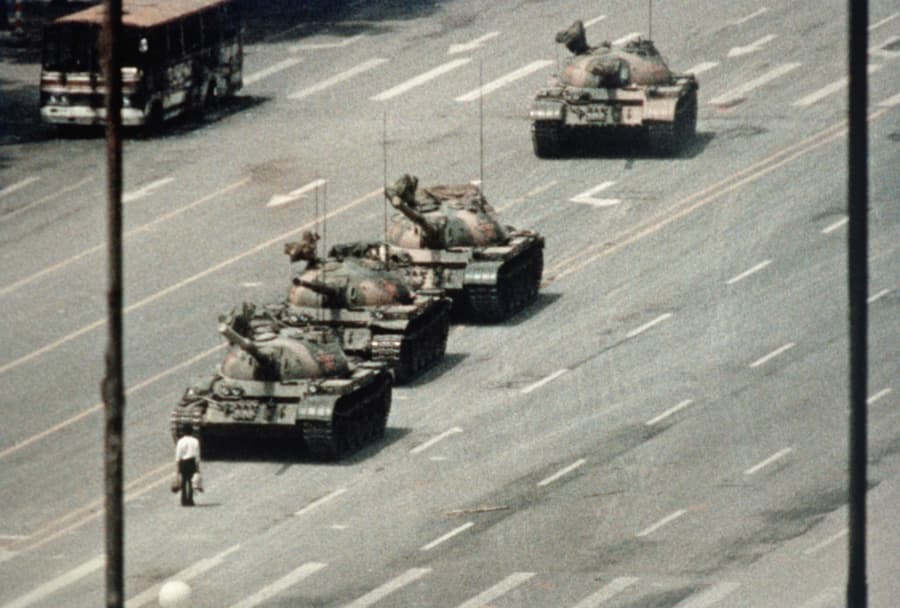
On the night of June 3 to 4, 1989, Chinese army columns moved on Beijing from multiple directions, using armored vehicles and assault rifles to clear the route into Tiananmen Square, where hundreds of thousands of students and workers had been gathered for weeks demanding an end to official corruption and the beginning of genuine political dialogue. As soldiers were shooting civilians in the streets, China’s most senior leaders were inside Zhongnanhai, the walled Party leadership compound in central Beijing, making arrangements to protect their personal wealth. That, at least, is what a senior Swiss diplomat told Canadian embassy staff in the weeks that followed, according to diplomatic cables released under Canada’s Access to Information Act in 2015: nearly every member of the Politburo Standing Committee, the seven-to-nine-man body that holds supreme power in the Chinese Communist Party, had approached the Swiss ambassador seeking help moving substantial sums into Swiss bank accounts.
Seven senior generals opposed the crackdown yet the army entered anyway
On May 17, 1989, Deng Xiaoping, who held supreme decision-making authority in China at the time despite holding no formal state title, ordered martial law imposed across Beijing. Four days later, seven of China’s most senior military commanders signed a joint letter addressed to the martial law command and the Central Military Commission, the Party’s supreme body for military control, explicitly demanding that the army stay out of the capital.
In the letter, the seven generals argued that the army, as a force that existed to serve the people, had no legitimate basis for turning its weapons on them, and warned that military intervention would cause bloodshed and deepen the crisis.
The seven signatories, Zhang Aiping, Ye Fei, Xiao Ke, Yang Dezhi, Chen Zaidao, Li Jukui, and Song Shilun, were all full generals and veterans of the revolutionary era who had led Chinese forces in major campaigns going back to the 1930s and 1940s. For men of their stature to intervene collectively in an active operational decision was without precedent. The army entered the capital anyway.
The order itself was indefensible: a government that claimed to serve the people was preparing to shoot them. The students and workers gathered in Tiananmen Square were unarmed, asking for two things: an end to corruption and the opening of genuine political dialogue.
SIGN UP FOR OUR FREE NEWSLETTER
You are now signed up for our newsletter
Check your email to complete sign up
Dum-dum bullets and tank treads: how the army killed that night
The army deployed expanding bullets, known colloquially in Chinese as “dum-dum rounds” or “blooming bullets.” Dum-dum ammunition, originally produced in British India in the nineteenth century, is designed to expand on impact: the entry wound corresponds to the bullet’s caliber; the exit wound does not. The 1899 Hague Declaration banned their use in international warfare on humanitarian grounds. Evidence gathered from Beijing hospitals in the days after June 4, including testimony from surgeons who treated the wounded, indicates the People’s Liberation Army deployed them that night.
Soldiers also used tanks against civilians who posed no military threat. Chen Gang, then a third-year university student in Beijing and now a resident of the United States, later described what he witnessed near the military’s general hospital on Fuxing Road in the city’s Haidian district. According to his account, near the hospital’s main intersection he came upon human remains that had been crushed flat by a tank; sanitation workers later removed them with shovels.
Canadian diplomatic cables from the same period contain an account from embassy staff describing a young man who had been pushing a baby carriage alongside a woman and child when a tank ran over all three. According to the cable, the tank reversed and ran over them again.
The death toll from June 4 remains officially suppressed by the Chinese government. Estimates from credible sources, including the Chinese Red Cross, which briefly released a figure before retracting it under pressure, and retrospective assessments by researchers using hospital records, range from several hundred to several thousand. The lowest credible estimates exceed the official government figure of zero.
As the killing proceeded, Politburo members were arranging Swiss bank transfers
The Canadian Access to Information Act releases include a cable transmitted to Ottawa in which a senior Swiss diplomat described his recent experience with China’s top leadership. According to the cable, the Swiss ambassador told Canadian embassy personnel that over the preceding months, nearly every member of the Politburo Standing Committee had approached him seeking help moving substantial sums into Swiss bank accounts. The Swiss ambassador reportedly requested that this information be held in the strictest confidence.
These claims have not been independently verified. No names, figures, or transaction records appear in the available public documents. The cables record what the Swiss ambassador said he was told, not confirmed transfers. Standard diplomatic cable practice records conversations as reported speech, and neither the Canadian nor Swiss governments have released underlying documentation that would corroborate the transfers.
According to the same reporting, the Swiss diplomat told his Canadian counterparts that China’s top officials feared each other far more than they feared the students in the square.
The Politburo Standing Committee was bitterly divided over how to respond to the protests. Zhao Ziyang, the Party’s general secretary and its most senior official, opposed martial law and was removed from power after losing the internal vote. He was placed under house arrest, where he would remain until his death in 2005. The men who survived in power, including Li Peng, the prime minister who signed the martial law order, and Jiang Zemin, the Shanghai Party secretary who was elevated to replace Zhao as general secretary, understood that the factional struggle could have gone the other way.
Senior Party officials moving assets abroad in the spring of 1989 were almost certainly driven by fear of political reversal as much as by greed: fear of purge, and the kind of exit planning that men engage in when they understand that the system they serve can destroy them as efficiently as it destroys its enemies. Swiss banking records from the period are sealed. Hong Kong financial institutions that handled mainland transfers in the late 1980s have not made relevant records public.
On the night of June 3 to 4, 1989, the men who ordered the massacre were simultaneously making arrangements to protect themselves from its consequences. The soldiers followed orders. The commanders prepared contingencies.
Thirty-seven years on, the Party still cannot afford to acknowledge June 4
The Chinese Communist Party has never acknowledged the massacre, never released casualty figures, and has spent thirty-seven years suppressing every attempt by survivors, journalists, and scholars to document it. Searches for the date itself remain blocked on Chinese internet platforms. Mothers of the dead who formed an unofficial organization to record names and press for accountability have been harassed, detained, and surveilled for decades.
The suppression serves an active political purpose. Acknowledging the massacre would require acknowledging that the Party ordered soldiers to kill citizens who were asking for accountability, and that the men who gave those orders simultaneously wired their private assets out of the country. That combination, killing the people while moving your money abroad, makes the ideological scaffolding of the regime, its claim to govern in the name of the people, impossible to sustain.
The soldiers who entered Beijing that night followed their orders. The commanders who gave those orders made sure they had somewhere to send their money.
Note: Casualty figures from the June 4 crackdown have been officially suppressed by the Chinese government; credible independent estimates range from several hundred to several thousand. The Swiss ambassador’s account of Politburo Standing Committee members seeking Swiss bank transfers is drawn from Canadian diplomatic cables released under Canada’s Access to Information Act; these claims have not been independently verified.
By Dan Fengchen, Vision Times